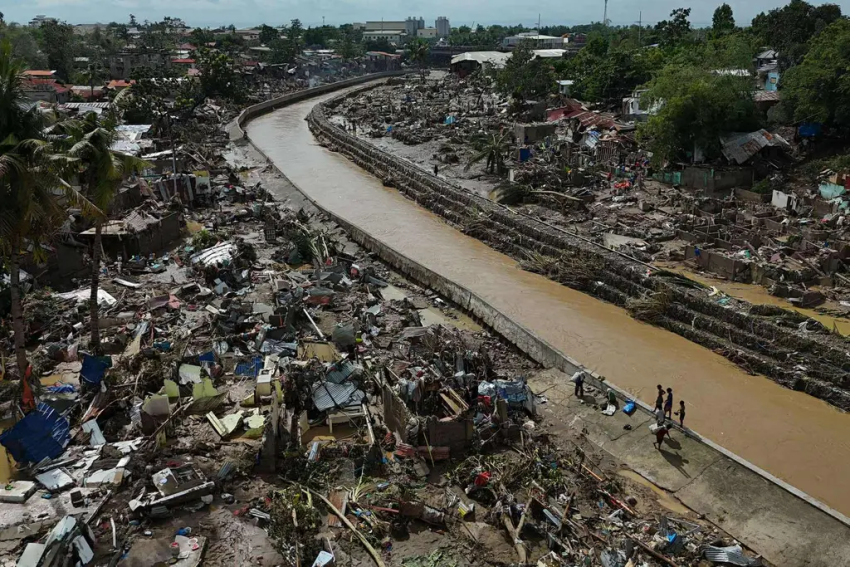
At least 114 people have died and 127 remain missing in central Philippines after a typhoon caused destruction and widespread flooding, which local officials suggest could have been prevented if not for persistent graft in flood-control projects.
Some 71 of the casualties were in the central province of Cebu, a province that was still recovering from a 6.9-magnitude earthquake that struck two months ago and killed dozens. President Ferdinand Marcos Jr. has since declared a state of national calamity.
Typhoon Kalmaegi brought destruction to the region, making landfall on Tuesday as a Category 1-equivalent hurricane. It also brought in unusually heavy rains: in the 24 hours before it made landfall, Cebu received more than 7 in of rainfall—equivalent to about a month and a half’s worth of rain in November. Heavy rains have caused rivers to overflow, washing away entire communities, and have triggered landslides. Winds have toppled trees and power lines and have flattened homes.
But Kalmaegi also collapsed flood-control infrastructure in the province that was ostensibly meant to protect citizens in such disasters. It once again thrusts into the spotlight a multibillion-dollar corruption scandal related to substandard public works projects that have been a hot-button topic for Filipinos for months.